Wulin glossary
Facts checked 2026-10-28
The store copy names Phantom World, Memory Flowers, the Wulin and the Discordance, Transcension, the Lady of the Veil and Inanis' Dreamscape. Transcension is the sha-chi augmentation thread, not a difficulty setting.
Phantom Blade Zero's store copy drops a run of proper nouns without explaining them: Phantom World, Memory Flowers, the Wulin and the Discordance, Transcension, the Lady of the Veil, Inanis' Dreamscape. None of them are decoration; each names a system, a place or a story thread.
This page pairs the official English wording with the Chinese term it translates, and explains what the game actually does with each one.
The official terms
| Chinese | English | What it refers to |
|---|---|---|
| 影境 | Phantom World | The game's world; the setting for all eight regions |
| 记忆之花 | Memory Flowers | Story collectibles carrying fragments of the past |
| 表里武林 | the Wulin and the Discordance | The visible and hidden layers of the martial world |
| 杀气改造 | Transcension | Augmentation built on sha-chi |
| 圣母娘娘 | the Lady of the Veil | A veiled figure tied to the world's mysteries |
| 虚空梦境 | Inanis' Dreamscape | A dream-space attributed to a being named Inanis |
| 功夫朋克 | kungfupunk | S-GAME's own label for the art style |
| 奇诡武装 | Phantom Edges | The secondary weapon class |
Wulin, jianghu and the Discordance
The wulin is the martial underworld: the society of schools, guardians and fighters bound by codes, operating outside the imperial court. The jianghu is the broader world those people live in — the rivers and lakes, the ordinary society beyond official power.
Phantom Blade Zero uses both, and adds the Discordance: the hidden layer of the same martial world. The English splits one Chinese compound into two words, which is why the phrase reads oddly in trailers. When the game says "the Wulin and the Discordance", it means the seen and unseen halves of the same society.
Transcension is not a difficulty
This is the term most often misread. Transcension is built on the Chinese for sha-chi plus a word meaning rework or remake: it is augmentation applied to the qi force the combat system runs on.
It is not a New Game Plus mode, not a prestige system and not the 66 Days difficulty. If you see it described as any of those elsewhere, the description is wrong.
The Lady of the Veil and Inanis
The Lady of the Veil is a figure with a veil motif, tied to the Memory Flowers thread and to the world's hidden history. Inanis' Dreamscape is a location attributed to a being named Inanis — the English adds the name, the Chinese describes a void dream without one.
Both are story material. Neither is a mechanic you need to learn to fight better.
Kungfupunk
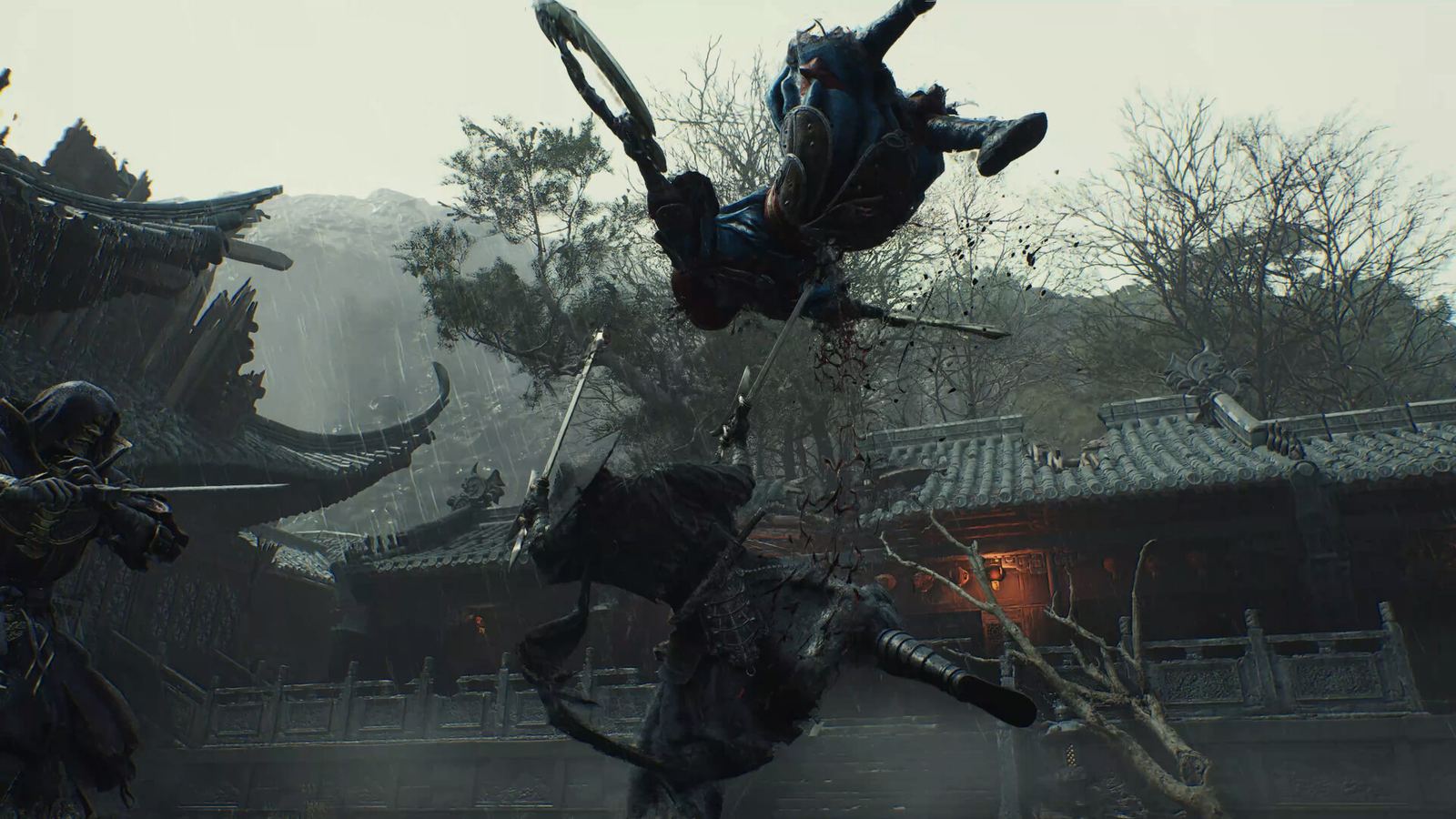
S-GAME's own label for the game's look: traditional wuxia cinema, cold steel, mechanical prosthetics, crumbling industrial ruins, Chinese aesthetics and modern rock music. It is the reason the game has cyborg limbs next to Ming-dynasty architecture, and the reason the marketing keeps saying it.
FAQ
Is the Wulin the same as the jianghu?
No. The jianghu is the wider world beyond official power; the wulin is the martial society inside it. The game uses both, and the Discordance is the hidden half of the wulin.
What does Transcension actually change?
It is the augmentation thread built on sha-chi. The game teases it as worldbuilding; it is not a separate progression menu like a skill tree.
Do I need to know these terms to play?
No. They add context to the story and to why characters behave as they do. The story primer covers the people; this page covers the vocabulary.
Why do the trailers use the Chinese names too?
Because the game is a Chinese production with an official Chinese script, and several names are translations rather than originals. The Memory Flowers page is a good example of a term that reads differently in each language.